Paintings
Book of Eden
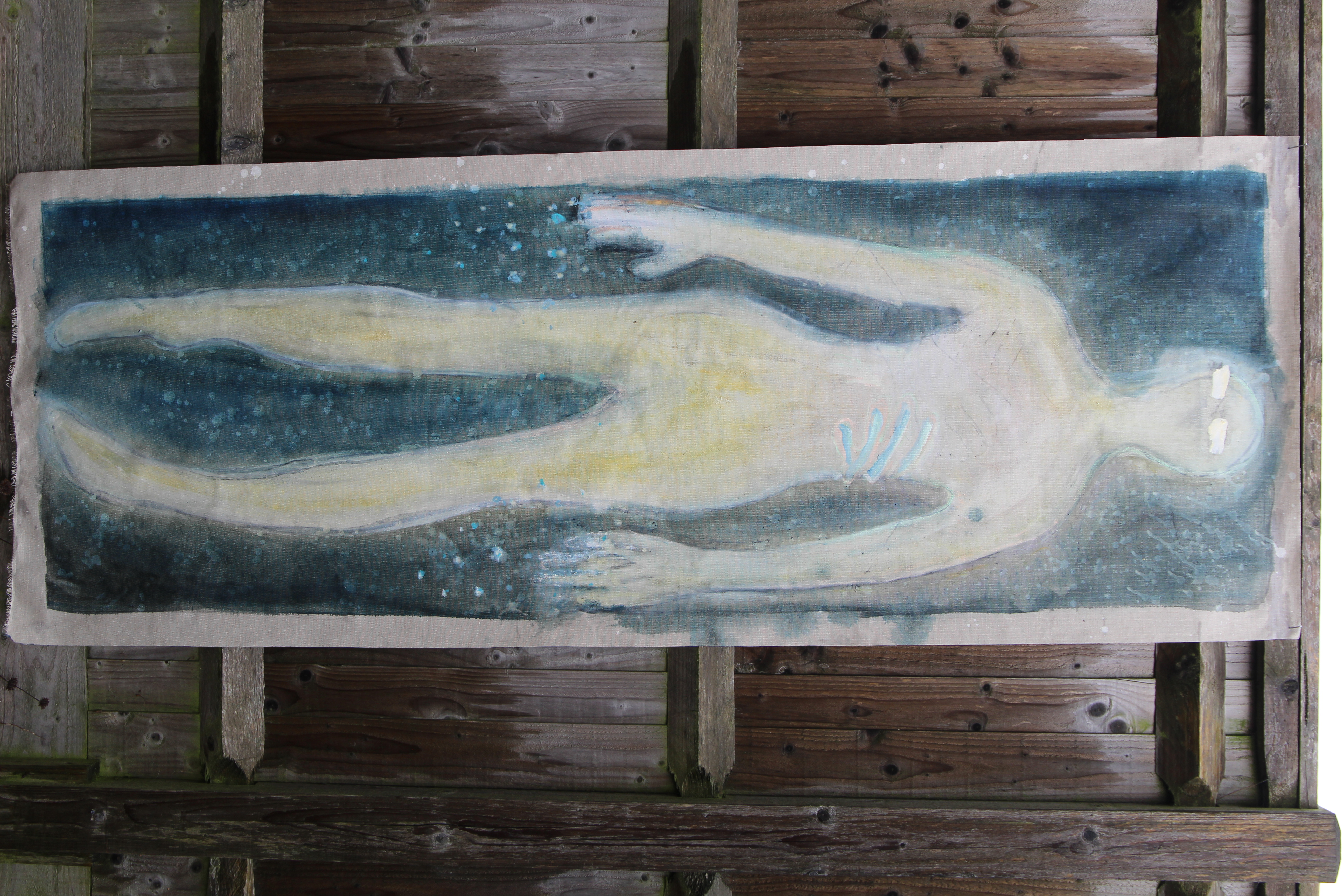
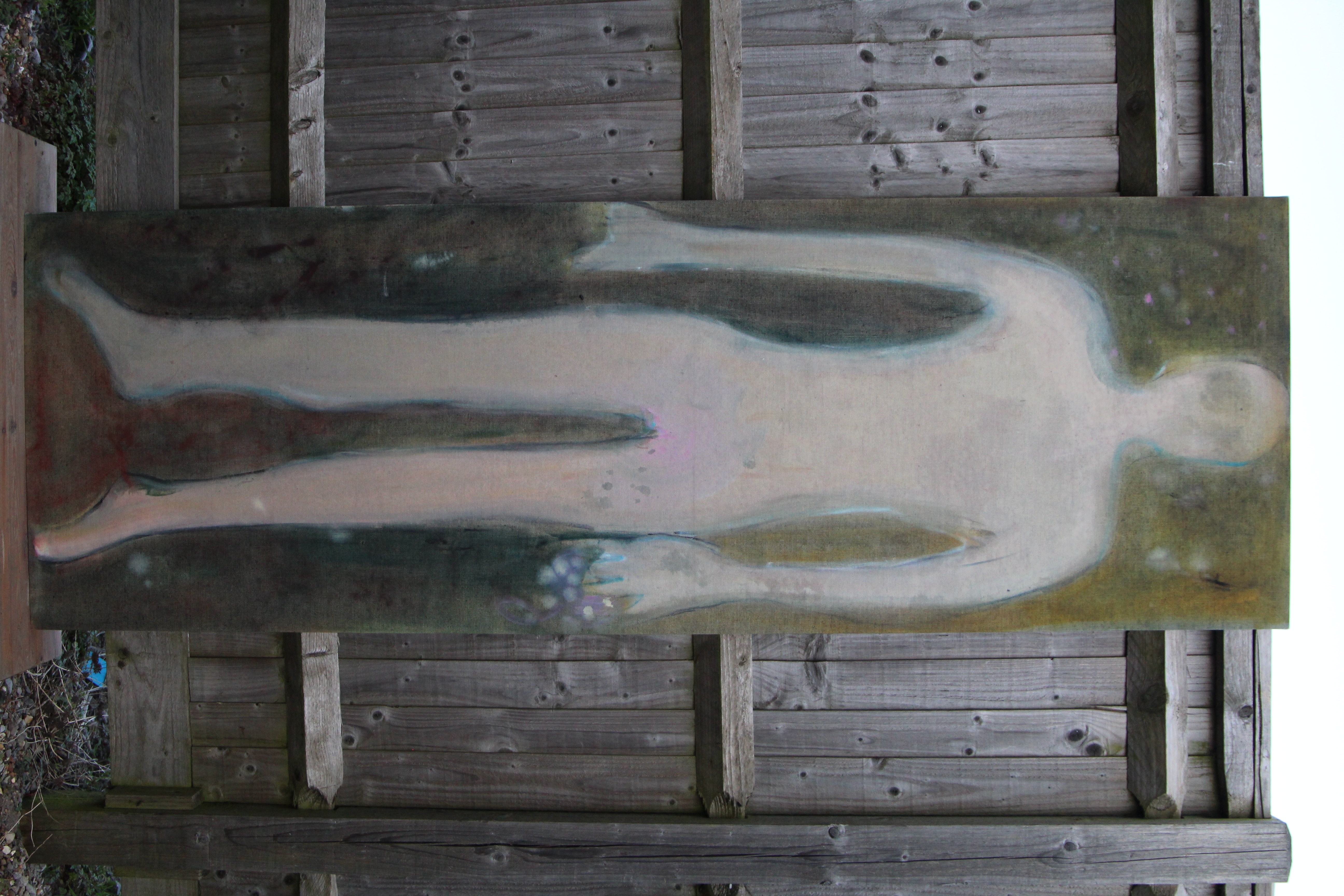
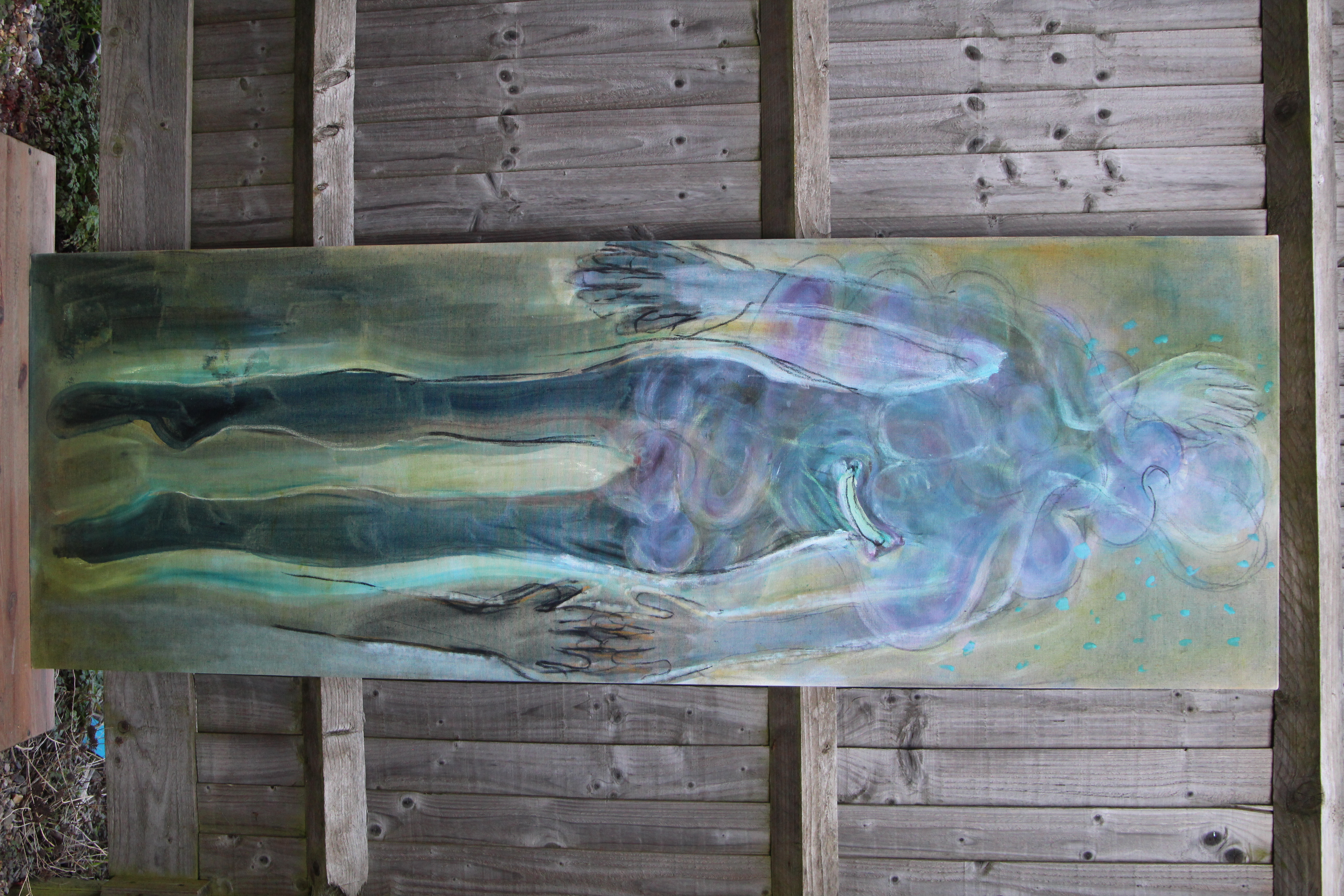
Playing with embodied power structures of our society using the cultural origin story of Adam and Eve, as a vehicle, offering, hopefully, playful alternatives to where the power and sexual agency lie. I have also found myself wondering about some fundamental questions like - How did first man and woman have sex? Was Eve an animal before she ate the apple? Post apple was / is Eve the most powerful woman in the world? Several motifs repeat throughout the work: bones, ribs, hands, serpents, babies, trees and templates of bodies. 15 years of Jungian analysis means they are all personally significant symbolically – hopefully speak to the universal as well. I’ve been dabbling in here for years but more recently established some key pieces of work. The Hand of God - a poetic rewrite of the first three chapters of Genesis from a feminist and ecological perspective. In the poem, the birth of the Earth is imagined as a human birth. Writing it took me to some interesting places, poetically and geographically – it was exhibited in Jewish Art Salon in New York, and its ideas continued feed ongoing work. The Book of Eden, a lead reliquary – a container to preserve something sacred – in this case an ecological narrative that speaks to the inheritance of the natural world. It shifted from a story about humanity’s exile from paradise and more to a question of what we choose to preserve, and what we risk losing. Colab with a friend Tim Fuge. At the same time, I was making a series of paintings of a weir that came out looking skeletal, embodied, and some looked a bit like they had entombed figures in them, which then sparked a little run of monotypes. [I had been looking at the Thomas Becket windows in Canterbury Cathedral and bones in reliquaries]. Once I was out of the river, I started making life-sized oil paintings using my own body as a template (and subsequently others), entombed in the canvas. I found myself in caveman territory, imagining early humans scribing around each other with charcoal. The paintings are long and narrow, originally to be like a tomb, but componentisation has become conceptually important, as I can put them in different combinations to change the narratives, like key frames in a storyboard. As I’ve been doing this Eve has gained agency, and sadly, Adam is loosing his, and the rib has become an increasingly significant symbol, reclaimed by the feminine as life force and the sacred feminine. This is also generating paintings like ‘Woman burying a Bone’. She is acting instinctively, possibly ritually, performing an act of preservation of nourishment, in the reliquary within the earth. ‘The Notorious Snake Charmer’ and ‘Basket Case’. Oil on linen Eve has eaten the apple, killed the snake and chosen not to share the fruit with Adam. Adam, remains in an unevolved state: animal, innocent, bewildered—or maybe just not fully activated, suspended in a pre-conscious state. Eve keeps him in a basket until she has some use for him. Adam is no longer the first and authoritative human from whom Eve is derived. Instead, he becomes Eve’s dependent creature: a pet or familiar, - or an emergency male supply. Eve controls access to knowledge, sexuality and agency. Theres a bit of dark humour in there somewhere, as I test altering the ancient distribution of power. Imagine you are in Startrek and we are landing in different worlds that explore the great mysteries of life.